
The Forbidden Fruits
Why these 8 "healthy" fruits flare eczema skin — and what to reach for instead.
You've been told fruit is healthy. And it is — for someone whose body isn't already running hot.
But if you have eczema, your skin is already working overtime to release heat, dampness, and inflammation. Some of the world's most beloved fruits pour fuel directly onto that fire.
This is the breakdown most dermatologists won't give you. Rooted in 3,000 years of Traditional Chinese Medicine, paired with what we know about histamine, allergens, and skin biology today.
Bookmark this. Share it with someone whose skin needs it.
First, the framework
In Traditional Chinese Medicine, every food has a thermal nature — cooling, neutral, warming, or hot.
Eczema, in nearly every case, is a condition of internal heat (often paired with dampness). The skin becomes the body's exit door for what it can't otherwise release.
When you eat warming or hot-natured fruits — even "healthy" ones — you give that fire more fuel. The result shows up on your skin within hours: redness, itch, weeping patches, sleepless nights.
The fix isn't restriction for restriction's sake. It's understanding which fruits cool versus heat your body, then choosing accordingly.
The 8 Fruits To Avoid (or seriously limit) If You Have Eczema
-
Slightly warming · histamine-heavy
Strawberries are one of the highest-histamine fruits on the shelf. Histamine drives the itch-scratch cycle directly — the burning redness, the 3am wake-ups, the raw skin behind your knees. From a TCM lens, they also generate light heat that surfaces as inflammation.
The "healthy berry" reputation hides a real trigger profile, especially for children and during active flares.
-
Warming · acidic · enzymatic
Pineapple contains bromelain, an enzyme that can directly irritate the skin. The acidity and warming nature drive heat outward, often appearing as redness around the mouth, neck, or wherever sweat collects.
In TCM, pineapple generates both heat AND dampness — a double trigger. Canned pineapple is worse: added sugar amplifies the heat.
-
Damp-Heat
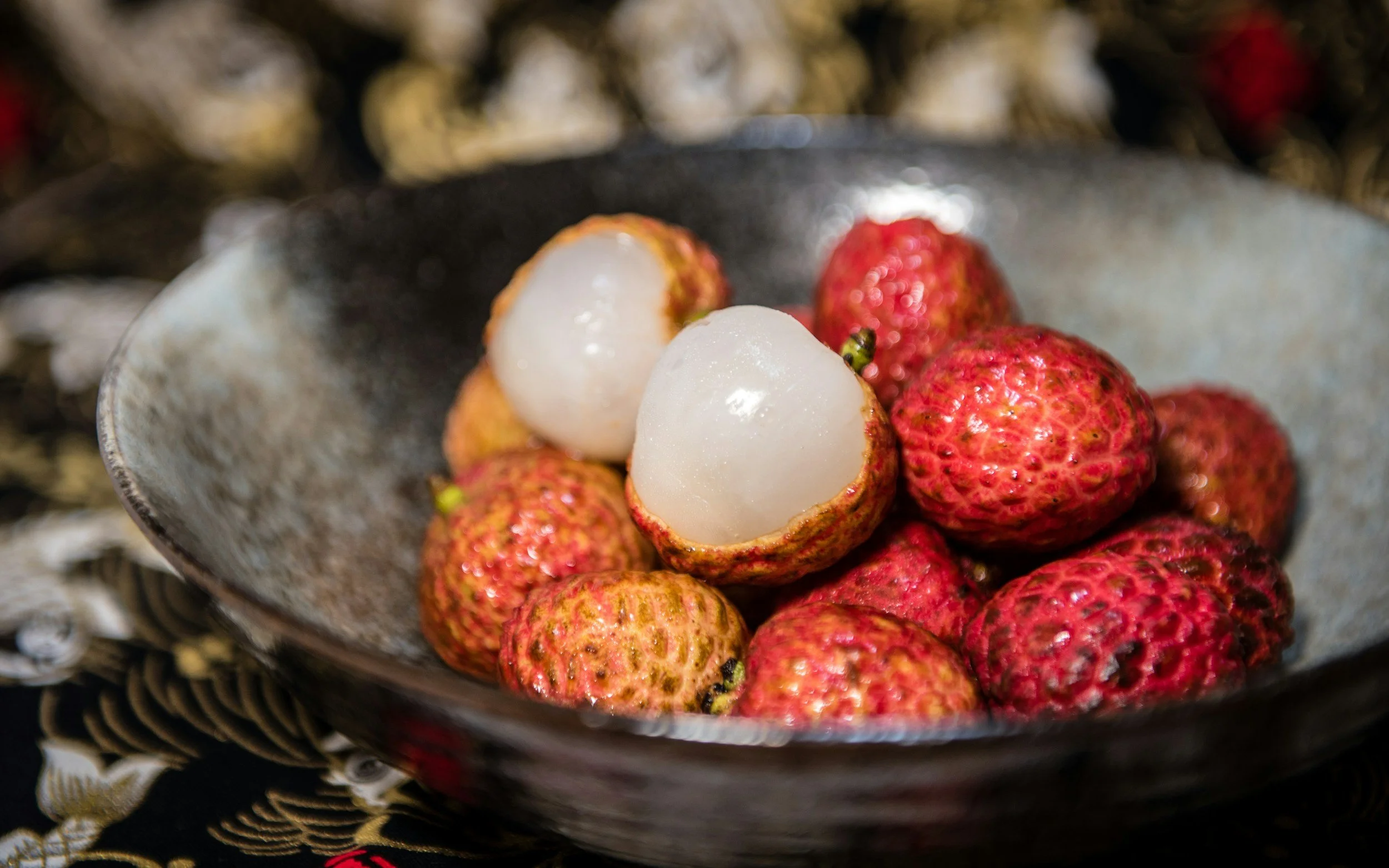
There's a classical Chinese saying: "One lychee, three torches of fire." It's not poetic exaggeration — it's clinical observation passed down for centuries.
Lychee pushes heat outward through the skin. A single cup can drive a 24–48 hour flare. Especially common during summer in Asian households, when peak season aligns with peak flares.
-
Warming + Damp
Sweet, sticky, slow to digest. Jackfruit's high sugar load creates the perfect environment for dampness to accumulate in the body — dampness in TCM presents as oozing, weeping, sticky eczema. The kind that won't clear.
Often hidden in Asian desserts, smoothies, and frozen prep — read labels carefully.
-
Hot Nature
"Dragon eye" — a small fruit with concentrated fire. Longan burns through your body's cooling reserves (what TCM calls Yin) over time. Patients often report itch peaks at night, which is precisely when Yin is meant to replenish. Longan blocks that.
Dried longan in soups and teas is even more concentrated. Common in postpartum recipes — be careful here.
-
Heating
Lychee's spiky cousin — same heat profile, same impact. Rambutan pushes inflammation up through the skin: redness, oozing, raised flare patches. The body uses your skin as the exit door for excess internal heat.
If lychee flares you, rambutan will too. They're not substitutes for one another.
-
Extreme Heat
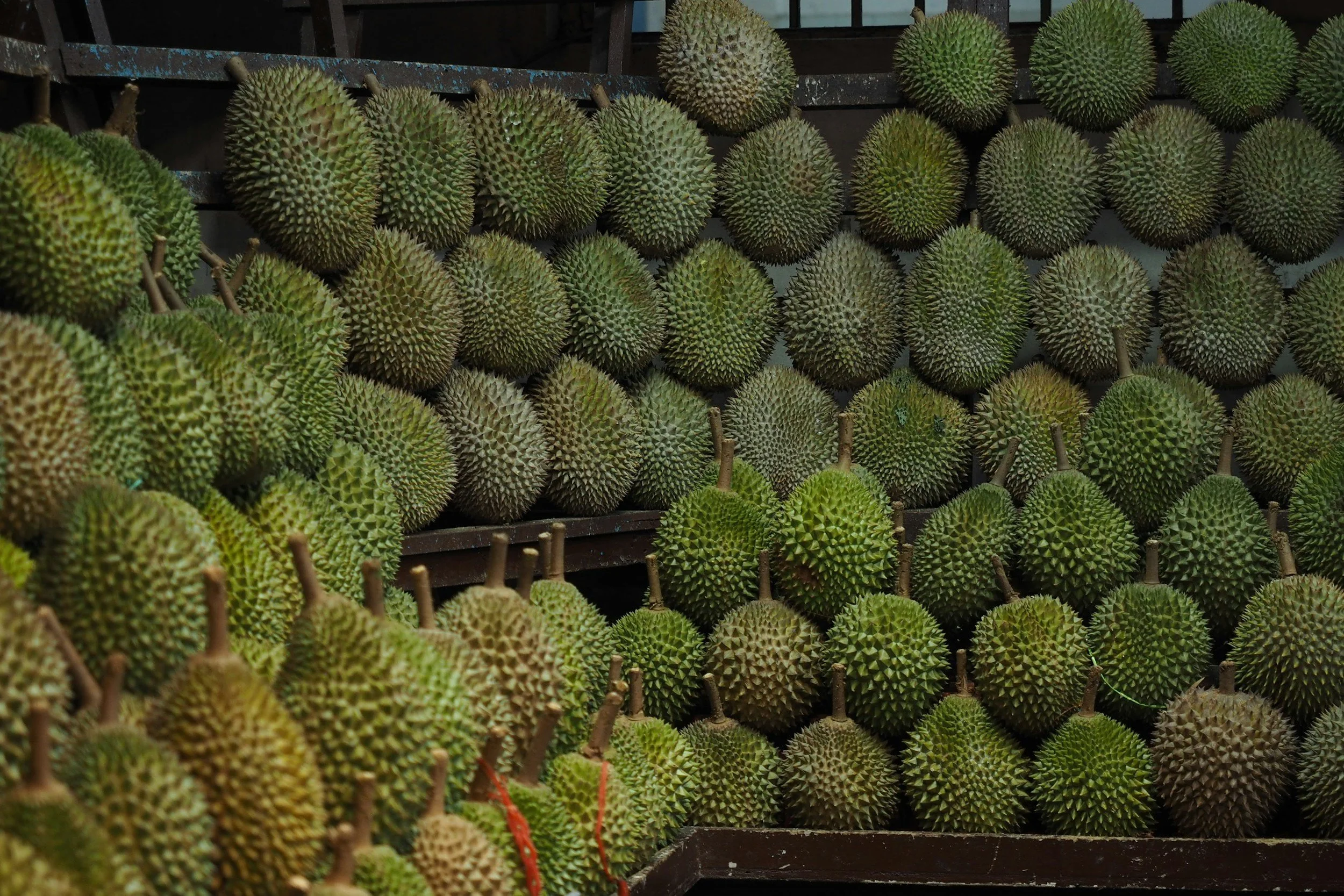
The "King of Fruits" — and the king of flare-ups. Durian is so heating that traditional Asian diets pair it with mangosteen ("queen of fruits") to balance the body. One serving can fire up eczema skin for three full days!
If you eat durian, water it with mangosteen. Better: skip it entirely during flares.
-
Damp-Heat + Allergenic
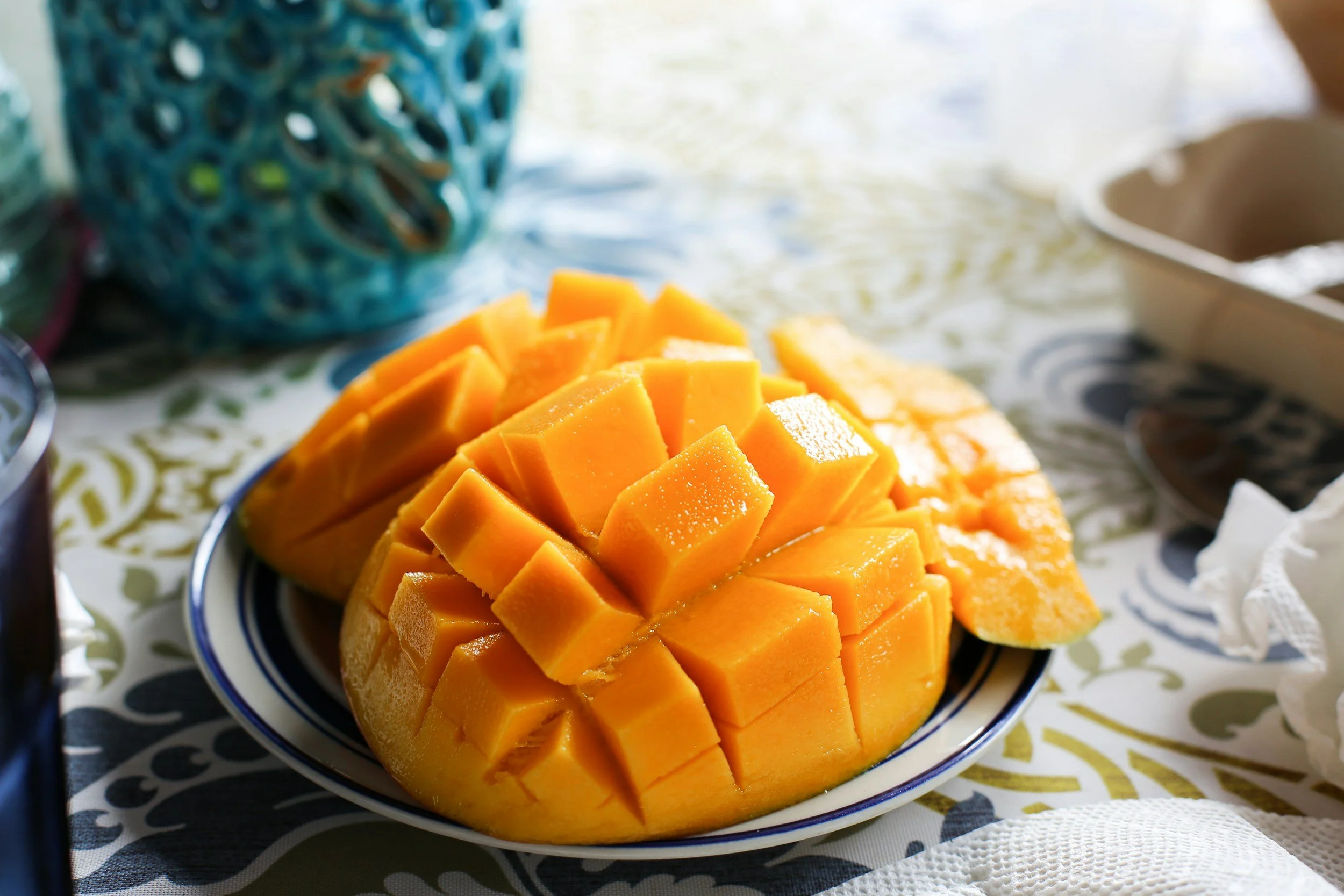
A double-trigger. The sap and skin of mangoes contain urushiol — the same compound as poison ivy. Many "mango allergies" are actually contact dermatitis from this compound.
From a TCM lens, mango generates both heat AND dampness — the exact two patterns most eczema patients are already managing. Mango sticky rice is an especially heavy hit.
Reach for these instead:
Cooling fruits won't make your eczema disappear overnight — nothing does. But they stop pouring fuel on the fire, and they support your body's natural cooling systems.
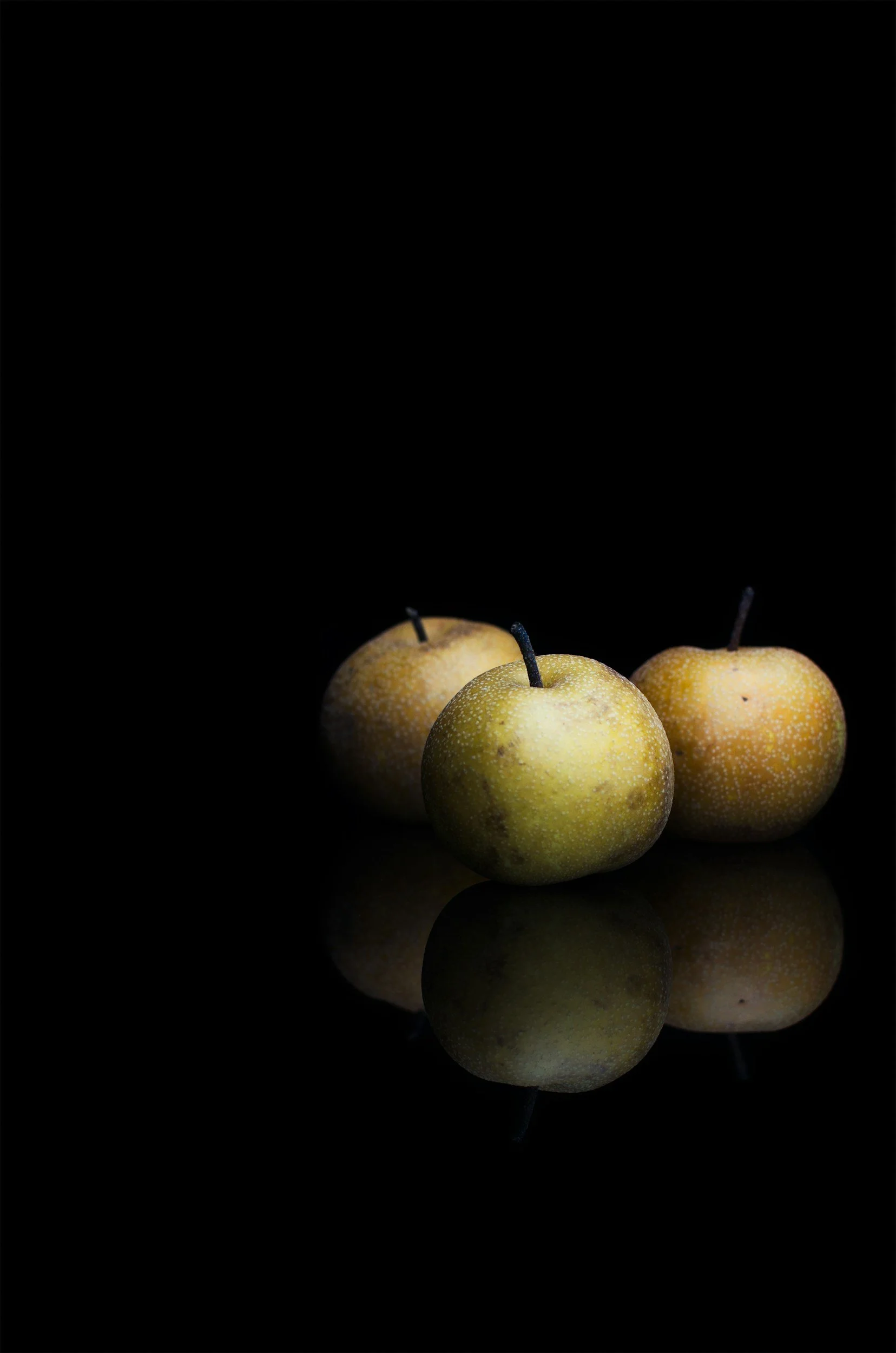
Organic Pear (Asian pear especially) — The king of cooling fruits in TCM. Moistens the lungs (which govern skin in TCM), supports barrier repair. Eat ripe and at room temperature.
Organic Watermelon (especially RIND) — Cooling, hydrating, replenishes Yin reserves. In moderation — it's still high-glycemic.
Organic Apple — Neutral thermal nature. The safest fruit on most TCM lists. Cooked apple (compote) is even gentler on the gut and skin.
Organic Blueberries — Antioxidants without the heat. Choose fresh — sugared preserves cancel the benefit.
Kiwi — Mildly cooling, high vitamin C. Supports skin renewal.
Green Grapes — Slightly cooling. Avoid red and purple varieties during active flares — they're warmer.
Final note
from Dr. Zeruyah
The body is brilliant. Eczema isn't a malfunction — it's a message.
When your skin flares after a fruit you've loved your whole life, it's not betrayal. It's communication. You were designed to whisper before you scream. The redness, the itch, the sleepless nights — those are whispers. Your job isn't to silence them. It's to listen.
This list isn't about restriction. It's about becoming fluent in your own body's language so you can finally choose differently — with wisdom, not fear.
This content is educational and rooted in Traditional Chinese Medicine principles. It is not a substitute for personalized medical advice. Always consult with a qualified practitioner before making significant dietary changes — especially if you're managing a chronic skin condition, pregnant, or breastfeeding.